


Bicycling from Junco crater to town of Puerto Baquerizo Moreno on San Cristóbal San Cristobal

We decided to rent a bicycle to explore San Cristobal on our own time. There are bicycle rentals everywhere so no need to book in advance. Do triple check that the the bike is fully functional (especially the brakes as it’s a steep decent from the highlands).,
We rented from a tour operator on Herman Melviille
street since it was only a few buildings away from the Sunset Galapagos hotel. Cost was $20 for the day. Included helmets and an emergency repair kit. They are open 7-7 so you can make it a full day excursion.

Next we hired a taxi driver to take use to Junco Crater. Cost was $25 including $5 tip. It was a reasonably steep hike to Junco Lake but nothing I’d call strenuous. It was misting out which is common in the highlands so do bring rain gear. Even when wet, the trail was not dangerously slippery (unlike our hike to Cerra Negra on Isabela last week)

From lake Junco back to town was predominately downhill so very easy ride. Our hotel manager warned us not to do biking stating that they had many many injuries, but we felt it was safe as long as you rode the brakes to reduce speed.
It was somewhere between rain and mist from lake junco to the town of El Progresso. We did attempt a few hikes which were listed in all trails but gates were up upon arrival. We took some side roads off the beaten path just to explore and the cows followed us


We stopped At Galapagos coffee and Petra’s. It looked like an interesting little coffee plantation with a little hike, but no one came to greet us after about 15 minutes standing around so we left with no coffee.

The next stop was the town of El Progreso where we picked up some beverages and ate coco crackers for lunch at a park. We also watched the local children practice soccer. English is extremely limited in the Galapagos but we managed. The town of El Progresso has a very interesting history with Manual Cobos who formed an agricultural center called “El Progreso” inland from Puerto Baquerizo Moreno, which produced leather from feral cattle, and fish and tortoise oil. A penal colony was then built on San Cristóbal Island in 1880 for prisoners from mainland Ecuador. This was eventually run by Cobos. By 1891, sugar cane plantations were established and a sugar factory was put into operation. Cobos ruled “El Progreso” with an iron fist, treating convicts as slaves. Cobos was assassinated by a group of his workers on January 15, 1904, and the prisoners escaped. A fishing company, called “The Predial” flourished from 1952 to 1960. The company stored fish in large refrigerators before shipping them to the continent. The business eventually fell into ruin due to its excessive costs. It's a very hard scrabble for any business that has tried to take root in the Galapagos. Be sure to visit the educational center just outside of town. It's full of Galapagos history and entry is free. An easy way to spend at half a day.

There is an official bike path that runs from El Progresso to the town center so no need to share the road with cars like is necessary higher up in the mountains. We passed some interesting scenery on the way to town.
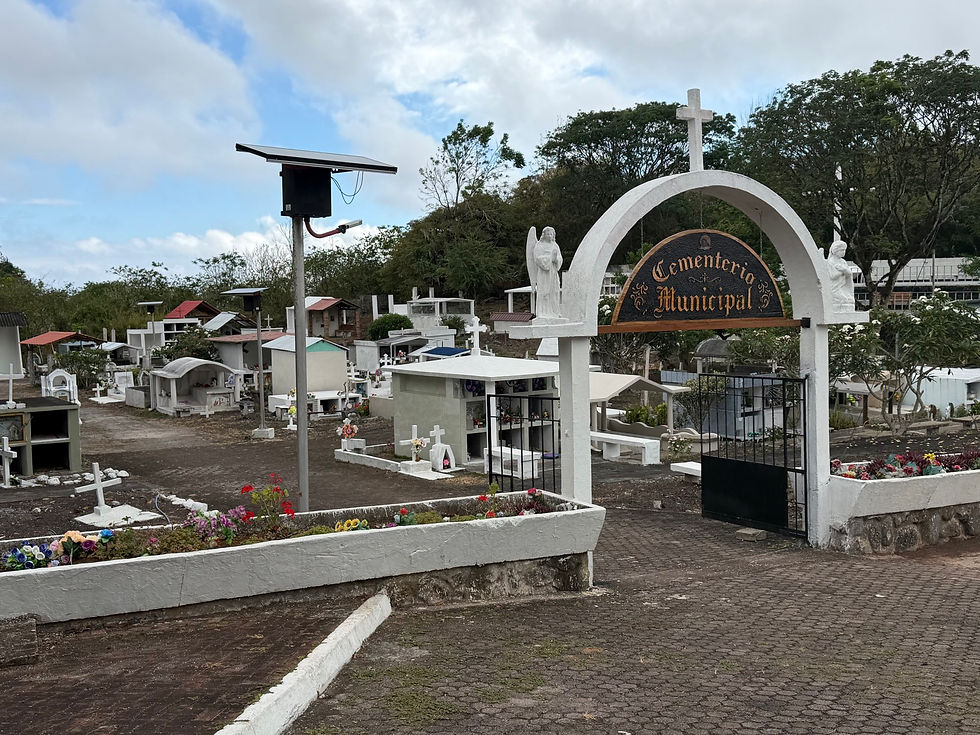

It got a bit of heavy traffic as we got closer to town. The official bike path ends at the top of town and I recommend you ride Avenida 12 De Febrero down to the water since that is a one way and seemed the safest way to navigate the busy road once the bike path ended.
All in all we had the bikes for about 7 hours. The cost was $40 for two bikes and $25 for taxi so an inexpensive way to explore the island. Just remember to ride your brakes down to avoid injury, as there are some portions with a 10% grade.


Comments